

The technology
What is 3D concrete printing?
3D concrete printing builds an object directly from a digital model: a robotic arm lays a special concrete mix layer by layer, with no mould and no formwork. This is how we make every piece at PHORM.
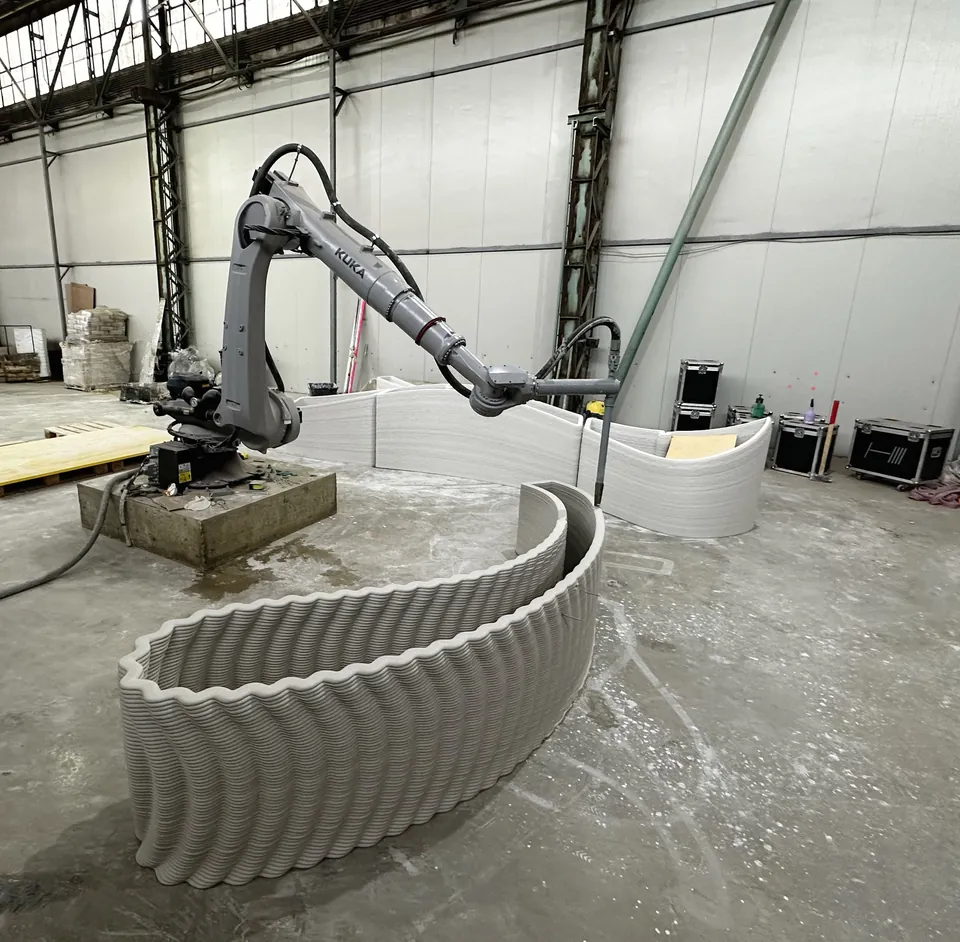
How it works
- A 3D model of the object is drawn or adapted for printing.
- Software turns it into a toolpath: the exact route of the nozzle, layer after layer.
- A robotic arm extrudes a printable concrete mix along that path.
- The piece cures, is finished and is delivered; large objects are printed in sections and assembled on site.
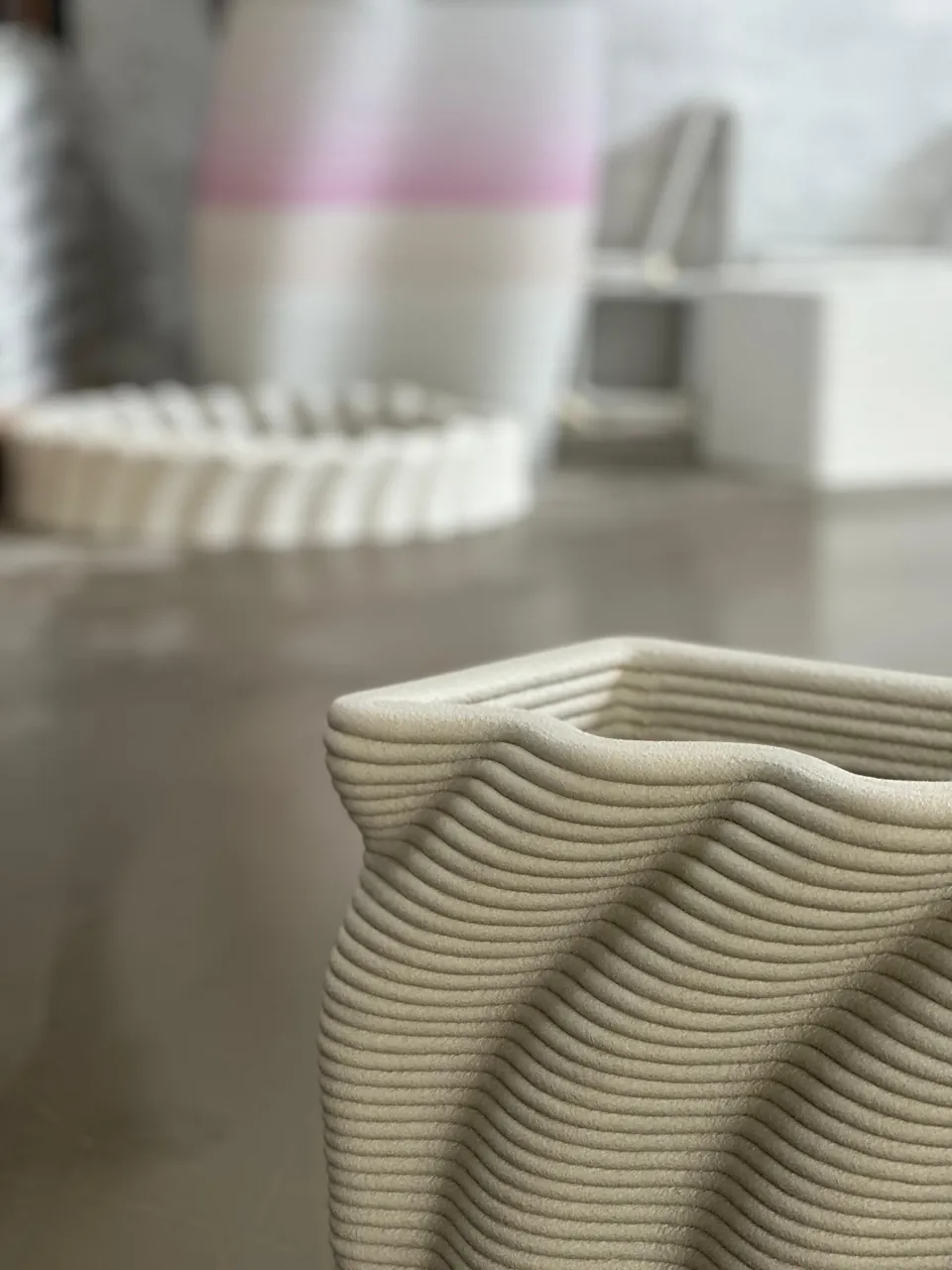
Why the layers show
Each pass of the nozzle leaves a visible line. Instead of hiding it, we treat it as the finish: a soft, tactile texture that catches light and belongs to the process, something casting cannot reproduce.
What it is good at, and its limits
Printing excels at curves, ribs, twists and one-off sizes, because nothing has to be released from a mould. Its limits come from gravity and scale: steep overhangs need support or a different geometry, and big pieces are split into printable sections. Resolving these limits is part of how we design each object.
Printed concrete versus cast concrete
Cast concrete needs a mould for every shape, which makes one-offs expensive and slow. Printed concrete moves the work into the digital model, so a single object costs no more to make than the fiftieth and changes can be made right up to printing.
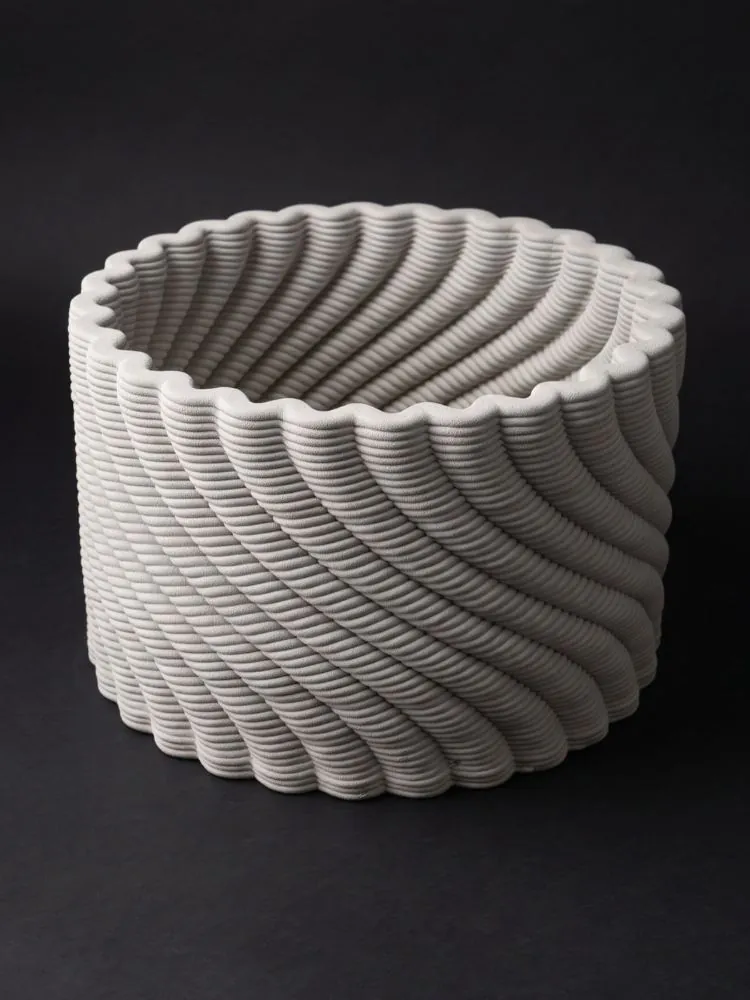
Models from the collection
The collection

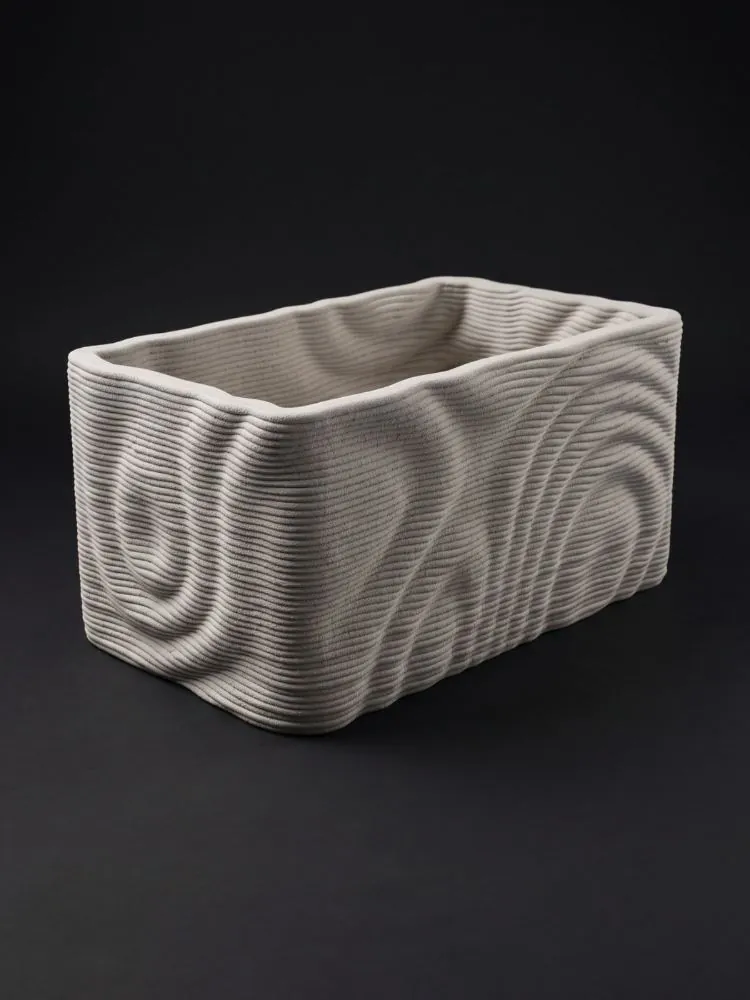
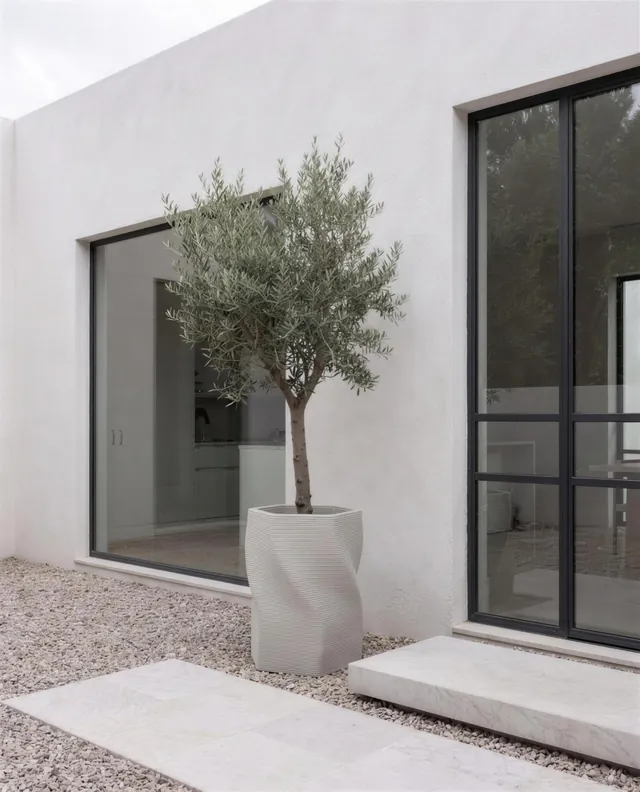
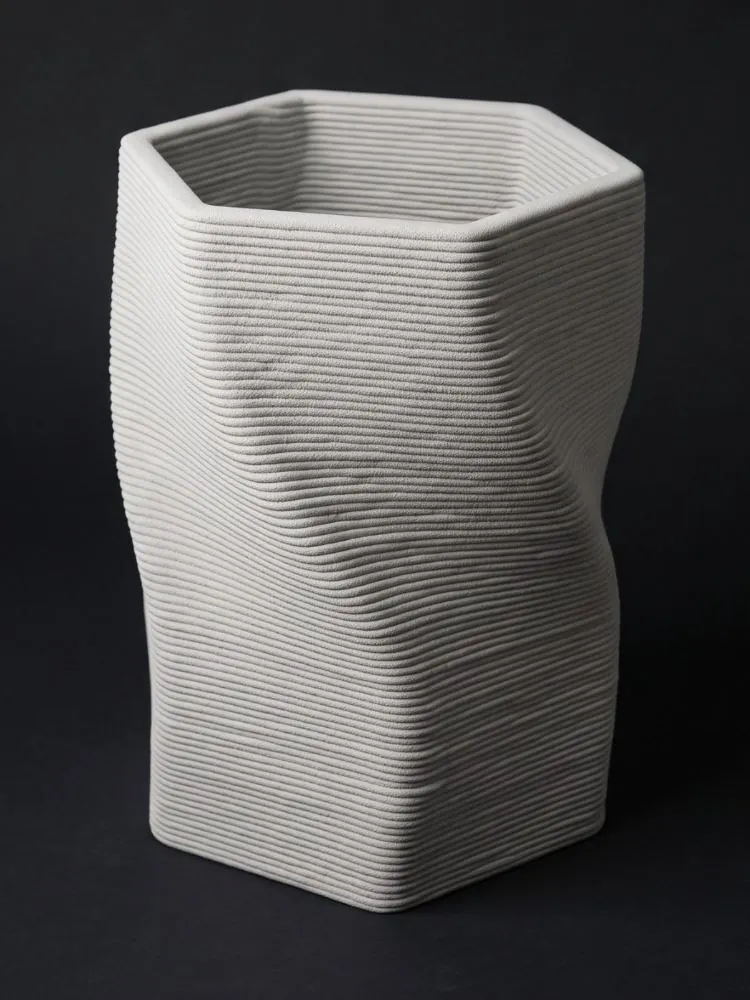
Related projects
Projects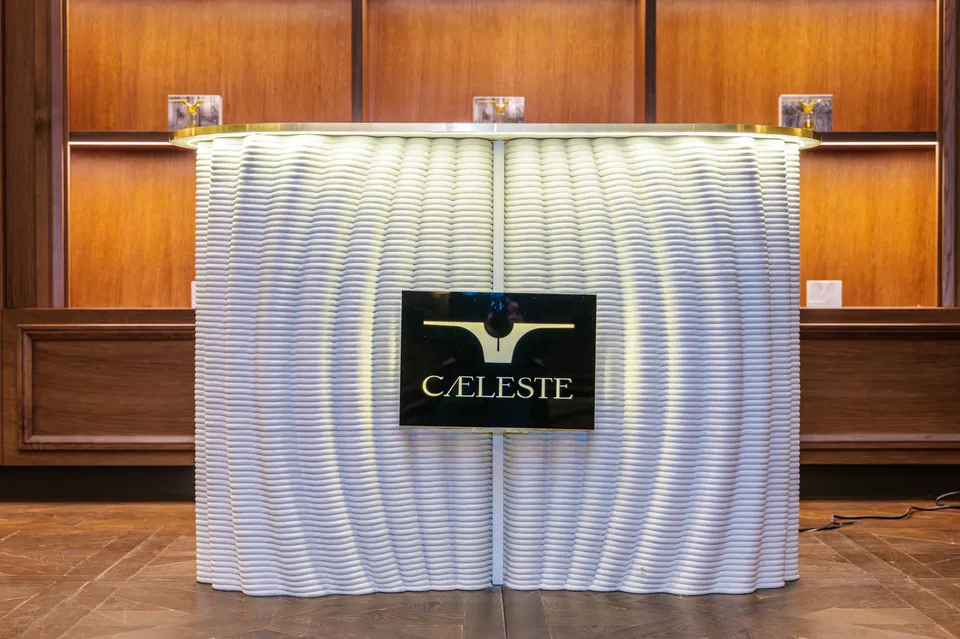

Questions
Good to know
Is 3D printed concrete only for buildings?
No. Besides houses and walls, it is used for furniture, planters, desks and urban furniture, which is the work we focus on.
Can I see the process?
Our projects and the video on our home page show the robotic arm printing in our Bucharest workshop.
Have a similar project?
Let's draw it for your space
Send us a plan, a sketch or a reference photo. We reply with a printable proposal and a quote.